
Chapter 2: Psychological Research
Challenges Conducting Developmental Research
Challenges Conducting Developmental Research
The previous sections describe research tools to assess development across the lifespan, as well as the ways that research designs can be used to track age-related changes and development over time. Before you begin conducting developmental research, however, you must also be aware that testing individuals of certain ages (such as infants and children) or making comparisons across ages (such as children compared to teens) comes with its own unique set of challenges. In the final section of this module, let’s look at some of the main issues that are encountered when conducting developmental research, namely ethical concerns, recruitment issues, and participant attrition.
Ethical Concerns
As a student of the social sciences, you may already know that Institutional Review Boards (IRBs) must review and approve all research projects that are conducted at universities, hospitals, and other institutions (each broad discipline or field, such as psychology or social work, often has its own code of ethics that must also be followed, regardless of institutional affiliation). An IRB is typically a panel of experts who read and evaluate proposals for research. IRB members want to ensure that the proposed research will be carried out ethically and that the potential benefits of the research outweigh the risks and potential harm (psychological as well as physical harm) for participants.
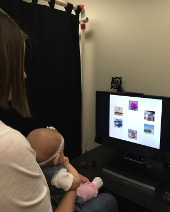
What you may not know though, is that the IRB considers some groups of participants to be more vulnerable or at-risk than others. Whereas university students are generally not viewed as vulnerable or at-risk, infants and young children commonly fall into this category. What makes infants and young children more vulnerable during research than young adults? One reason infants and young children are perceived as being at increased risk is due to their limited cognitive capabilities, which makes them unable to state their willingness to participate in research or tell researchers when they would like to drop out of a study. For these reasons, infants and young children require special accommodations as they participate in the research process. Similar issues and accommodations would apply to adults who are deemed to be of limited cognitive capabilities.
When thinking about special accommodations in developmental research, consider the informed consent process. If you have ever participated in scientific research, you may know through your own experience that adults commonly sign an informed consent statement (a contract stating that they agree to participate in research) after learning about a study. As part of this process, participants are informed of the procedures to be used in the research, along with any expected risks or benefits. Infants and young children cannot verbally indicate their willingness to participate, much less understand the balance of potential risks and benefits. As such, researchers are oftentimes required to obtain written informed consent from the parent or legal guardian of the child participant, an adult who is almost always present as the study is conducted. In fact, children are not asked to indicate whether they would like to be involved in a study at all (a process known as assent) until they are approximately seven years old. Because infants and young children cannot easily indicate if they would like to discontinue their participation in a study, researchers must be sensitive to changes in the state of the participant (determining whether a child is too tired or upset to continue) as well as to parent desires (in some cases, parents might want to discontinue their involvement in the research). As in adult studies, researchers must always strive to protect the rights and well-being of the minor participants and their parents when conducting developmental research.
Attrition
Another important consideration when conducting research with infants and young children is attrition. Although attrition is quite common in longitudinal research in particular (see the previous section on longitudinal designs for an example of high attrition rates and selective attrition in lifespan developmental research), it is also problematic in developmental science more generally, as studies with infants and young children tend to have higher attrition rates than studies with adults. For example, high attrition rates in ERP (event-related potential, which is a technique to understand brain function) studies oftentimes result from the demands of the task: infants are required to sit still and have a tight, wet cap placed on their heads before watching still photographs on a computer screen in a dark, quiet room. In other cases, attrition may be due to motivation (or a lack thereof). Whereas adults may be motivated to participate in research in order to receive money or extra course credit, infants and young children are not as easily enticed. In addition, infants and young children are more likely to tire easily, become fussy, and lose interest in the study procedures than are adults. For these reasons, research studies should be designed to be as short as possible – it is likely better to break up a large study into multiple short sessions rather than cram all of the tasks into one long visit to the lab. Researchers should also allow time for breaks in their study protocols so that infants can rest or have snacks as needed. Happy, comfortable participants provide the best data.
Replication of Findings: The Replication Crisis

As discussed previously, replication is the process of repeating research to determine the extent to which findings generalize across time and across situations. Recently, the science of psychology (not just developmental psychology) has been facing a crisis. It turns out that many studies in psychology—including many highly cited studies—do not replicate. Psychology is not alone in coming up short on replication. There have been notable failures to replicate findings in other scientific fields as well, such as in clean energy, genetics, and disease studies. The non-reproducibility of findings is disturbing because it suggests the possibility that the original research was done sloppily or raises suspicions that the research may have been falsified. That is not to say that all non-reproducible studies are built upon fake data. Other reasons for this crisis include, but are not limited to, studies using small sample sizes or a niche/insulated population, differences in procedures used between the original and replication studies, and publication biases (e.g., null results and replications being less likely to be rewarded through publication or funding).
For our part, psychologists also have a vested interest in ensuring that our methods and findings are as trustworthy as possible. Many journals, institutions, and individuals are taking steps to correct this issue by pre-registering studies based on methodology (as opposed to unique findings), championing open science, and encouraging one another to conduct and share their replication studies.
You can learn more about the Replication Crisis and initiatives to combat it by exploring the following materials:
- NOBA module summarizing the Replication Crisis in Psychology
- The Center for Open Science’s ideas about Reimagining Research
- Korbmacher et al. (2023) discuss the Replication Crisis through the lens of positive change
Conclusions
Developmental psychology is a fascinating field of study – but care must be taken to ensure that researchers use appropriate methods to examine human behavior, use the correct experimental design to answer their questions, and be aware of the special challenges that are part-and-parcel of developmental research. After reading this module, you should have a solid understanding of these various issues and be ready to think more critically about research questions that interest you. For example, what types of questions do you have about lifespan development? What types of research would you like to conduct? Many interesting questions remain to be examined by future generations of developmental scientists – maybe you will make one of the next big discoveries!
Check Your Understanding
process through which participants are informed of the procedures to be used in the research, along with any expected risks or benefits
