
Chapter 11: Development of Self and Identity
Gender and Sexual Identity Development
Gender and Sexual Identity Development
Development of Gender Identity
The task of gender development is a complex biopsychosocial process that takes place in concert with societal stereotypes and the local social contexts they shape. The empirical picture is not complete, but it seems that gender identities are complex internalized cognitive and emotional representations that children and youth construct for themselves over time, based on the biological and temperamental givens that each one comes with and their cumulative interactions with the social worlds of family, school, peers, and society. Much of gender development seems to reflect cognitive changes that allow children to successively realize and try to make sense of different aspects of gender identity, but this development is built on a foundation created by biological or neurophysiological givens. We will trace the main age-graded milestones that children experience in constructing their own gender identities, in order to suggest ways in which parents (and other adults) can support children’s and adolescents’ healthy development.
Gender development is a fascinating process because it is deeply rooted in biology, profoundly shaped by societal expectations and culture, and actively constructed by individuals over and over again at different developmental levels. All theories of gender identity posit that the processes shaping its development are both biological and societal, so it is important to get straight on those biological and social processes before we turn to development. This is also a fascinating historical moment to study gender development because science is revealing more and more about its biological and psychological complexity, just as society is undergoing a gender revolution in which people are questioning, exploring, and recognizing a much broader spectrum of gender and sexual identities.
Biopsychosocial Processes of Gender
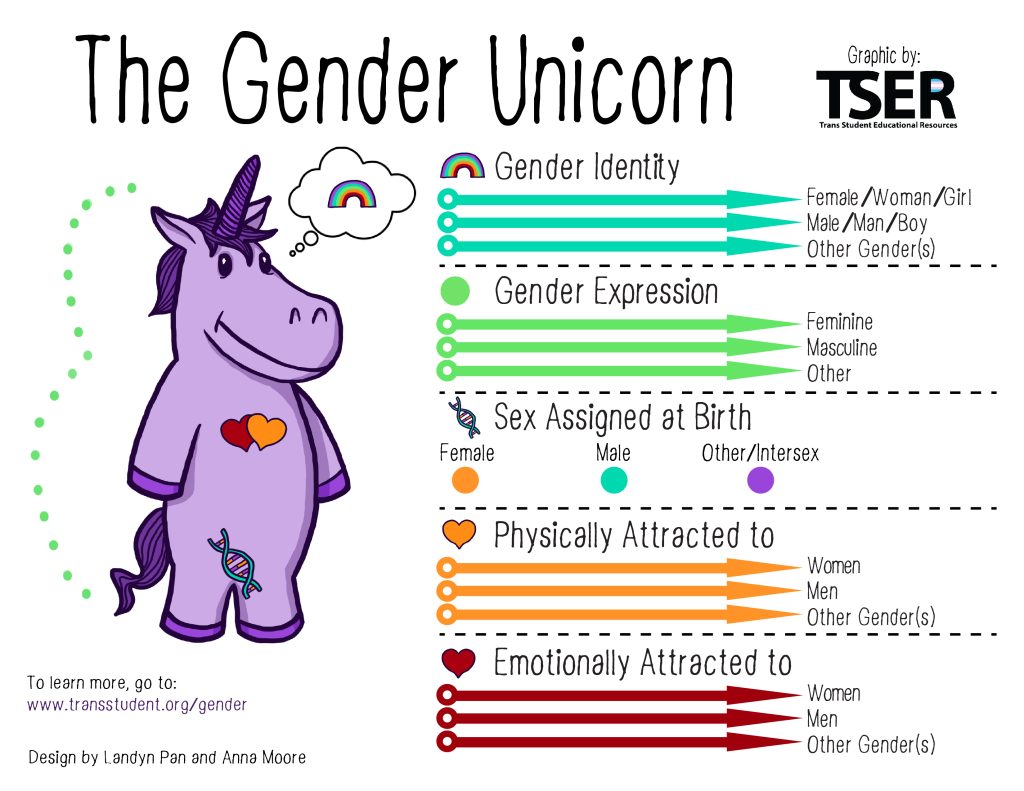
The terms sex and gender are often used interchangeably, although they have different meanings. In this context, sex refers to biological categories (traditionally, either male or female) as defined by physical differences in genetic composition and in reproductive anatomy and function. On the other hand, gender refers to the cultural, social, and psychological meanings that are associated with particular biopsychosocial categories, like masculinity and femininity (Wood & Eagly, 2002), which vary depending on other intersectional factors, like race, ethnicity, and culture.
Historically, the terms gender and sex have been used interchangeably. Because of this, gender is often viewed as a binary – a person is either male or female – and it is assumed that a person’s gender matches their biological sex. However, recent research challenges both of those assumptions. Although most people identify with the gender that matches their natal sex (cisgender), some of the population (estimates range from 0.6 to 3 percent) identify with a gender that does not match the sex they were assigned at birth, or transgender (Flores et al., 2016). For example, an individual assigned as male based on biological characteristics may identify as female, or vice versa. Researchers have also been increasingly examining the long-held assumption that biological sex is binary (e.g., Hyde et al., 2019). Although it has always been clear that there are more than two biological sexes, for example individuals who are intersex (see box), more recently scientists have identified dozens of markers of sexuality outside of the reproductive system (e.g., genetic, epigenetic, hormonal, endocrine, neurophysiological, psychological, social). People have a range of different combinations of these characteristics, suggesting that biological sex is more complex and multifaceted than a binary category.
Beyond the Binary in Biological Sex
Human experiences are genetic and environmental, and sex differentiation further showcases how this process is often oversimplified and discussed from within binary systems of “female” and “male” when the reality lends itself more toward spectrums and continuums from the moment we begin in the womb to how we undergo many changes throughout our life’s course.
Biological sex is sometimes may be considered binary, however, some individuals are intersex, or born with either an absence or some combination of male and female reproductive organs, sex hormones, or sex chromosomes (Jarne & Auld, 2006). In humans, intersex individuals make up a small but significant proportion of world’s population, with recent estimates ranging between .05 and 2 percent (Blackless et al., 2000). There are dozens of intersex conditions, and intersex individuals demonstrate some of the diverse variations of biological sex. Some examples of intersex conditions include:
- Turner syndrome: the absence of, or an imperfect, second X chromosome
- Congenital adrenal hyperplasia: a genetic disorder caused by an increased production of androgens
- Androgen insensitivity syndrome: when a person has one X and one Y chromosome, but is resistant to the male hormones or androgens
Greater attention to the rights of children born intersex is occurring in the medical field, and intersex children and their parents should work closely with specialists to ensure these children develop positive gender identities.
Research has also begun to conceptualize gender in ways beyond the gender binary. Genderqueer or gender nonbinary are umbrella terms used to describe a wide range of individuals who do not identify with and/or conform to the gender binary. These terms encompass a variety of more specific terms that individuals may use to describe themselves. Some common terms are genderfluid, agender, and bigender. An individual who is genderfluid may identify as male, female, both, or neither at different times and in different circumstances. An individual who is agender may have no gender or describe themselves as having a neutral gender, while bigender individuals identify as two genders.
Cisgender is an umbrella term used to describe people whose sense of personal identity and gender corresponds with their birth sex. It is important to remember that sex and gender do not always match and that gender (transgender) is not always binary; however, a large majority of prior research examining gender has not made these distinctions. As such, many of the following sections will discuss gender as a binary. Throughout, we will consider the development of “gender-nonconforming” children. This is a broad and heterogeneous group of children and adults whose gender development does not fit within societal dictates. Because societal expectations are so narrow, there are many ways not to conform, and we mention a few here, just to give a flavor of these alternative pathways. Many of these can be healthy and positive, but children and adolescents who follow these pathways need social validation and protection from gender discrimination and bullying.
Gender Identity Development
Gender identity development is culturally bound and much of the work described about gender identity development reflects Western, Educated, Industrialized, Rich, and Democratic (WEIRD) population.
Infants observe messages about gender from adults’ appearances, activities, and behaviors (National Center, 2024). Interactions between infants and their parents are shaped by the sex of the baby, which also affects the child’s understanding of gender (Cerezo, 2017). Toddlers (18-24 months) begin to define gender and use messages from many sources, such as patterns in their homes and daycares. They start to use gender labels in their speech, and may seek out more gender-typed toys like dolls or trucks (Martin & Ruble, 2010).
Preschoolers (3-6 years) become more interested in what it means to be male or female. They may look for physical differences, as well as what activities and behaviors are considered “acceptable” for each. Cross-cultural studies reveal that children are aware of gender roles by age two or three, and by age four or five, start to behave according to them (Kane, 1996). Children acquire these roles through socialization, a process in which people learn to behave in a particular way as dictated by societal values, beliefs, and attitudes. As an effect of socialization, children may overgeneralize and stereotype the attitudes, traits, and behaviors of different genders. However, children who are allowed to explore different toys, are exposed to non-traditional gender roles, and participate in non-traditional play tend to have broader definitions of what is gender appropriate and may do less gender stereotyping.
Gender Around the World
One common assumption about gender is that all cultures divide human beings into two and only two genders. However, in some cultures, gender is more fluid and flexible, allowing individuals born as one biologic sex to assume another gender or creating more than two genders from which individuals can select.
A well-known example of a non-binary gender system is found among the Hijra in India. Often called a third gender, these individuals are usually biologically male but adopt female clothing, gestures, and names, may eschew sexual desire and sexual activity, and go through religious rituals that give them certain divine powers, including blessing or cursing couples’ fertility and performing at weddings and births. Hijra sometimes undergo voluntary surgical removal of genitals through a “nirvan” or rebirth operation. Some hijra are males born with ambiguous external genitals, such as a particularly small penis or testicles that did not fully descend (Nanda, 1999).
In places like India and among the Isthmus Zapotec in southern Oaxaca, Mexico, they created a third gender category with an institutional identity and role to perform in society for intersex individuals (Nanda, 2014).
These cross-cultural examples demonstrate that the traditional rigid binary gender model in the United States is neither universal nor necessary. While all cultures recognize at least two biological sexes, usually based on genitals visible at birth, and have created at least two gender roles, many cultures go beyond the binary model, offering a third or fourth gender category. Other cultures allow individuals to adopt, without sanctions, a gender role that is not congruent with their biological sex. In short, biology need not be destiny when it comes to gender roles, as we are increasingly discovering in the United States and as we will discuss later in this chapter.
Around age 6, children develop a sense of gender constancy, or understanding that superficial changes to their appearance does not mean that their gender has actually changed (Martin & Ruble, 2010). For example, if you are playing with a two-year-old boy and put barrettes in his hair, he may protest saying that he doesn’t want to be a girl. By the time a child is seven years old, they have a solid understanding that wearing barrettes does not change their gender.
Adolescents may experience fluidity and uncertainty about their sex and gender. This comes at a time in development when their hormones are fluctuating, they are undergoing physical and cognitive changes, and creating a sense of their identity (Reisner et al., 2016). Attitudes and norms about gender keep changing, so determining one’s gender identity can take time and undergo many revisions. The roles appropriate for men and women are also evolving, and some adolescents may adopt stereotypic masculine and feminine roles or foreclose on their gender identity altogether (Sinclair & Carlsson, 2013). Those that identify as transgender face even more significant challenges like bullying.
Watch It
Video 11.6 This clip from Upworthy shows how some children were surprised to meet women in traditionally male occupations.
It is important to understand these typical attempts for children and adolescents to understand the world around them. It is helpful to encourage children and support them as individuals, instead of emphasizing or playing into gender roles and expectations. You can foster self-esteem in children of any gender by giving all children positive feedback about their unique skills and qualities. For example, you might say to a child, “You were very helpful with clean-up today—you are such a great helper” or “You were such a strong runner on the playground today.” If an adolescent is questioning their gender, it is important to provide them with space and support to do so.
Exercise: Encouraging Healthy Gender Development
You can see more of their resources and tips for healthy gender development by reading Healthy Gender Development and Young Children.
Theories of Gender Identity Development
The development of theories of gender identity development were influenced by framework used to understand behavior at that time. During the 1940s to 1960s, behaviorism and social learning proposed that gender is learned through reinforcement and modeling. During the 1960s and 1970s, cognitive development theories suggested that children actively construct their understanding, rather than passively learning from their environments. During the 1980s and 1990s, information processing theories proposed that gender is organized and understood through a cognitive framework. Each of these perspectives is described in detail below.
Social Cognitive Theory and Behavioral Theories
Social Cognitive Theory suggests that gender role socialization is a result of how parents, teachers, friends, schools, religious institutions, media, and others send messages about what is acceptable and desirable behavior for males and females. If children receive reinforcement, they are motivated to continue a particular behavior; if they receive punishment, they are motivated to stop that behavior. In terms of gender development, children receive praise when they engage in culturally appropriate gender displays and punishment if they do not. When aggressiveness in boys is met with acceptance or a “boys will be boys” attitude, but aggressiveness in girls is frowned upon, children learn different meanings for aggressiveness related to their gender development. Thus, boys may continue being aggressive while girls may try to avoid acting aggressively.
The Case of David Reimer
In August of 1965, Janet and Ronald Reimer of Winnipeg, Canada, welcomed the birth of their twin sons, Bruce and Brian. Within a few months, the twins were experiencing urinary problems; doctors recommended the problems could be alleviated by having the boys circumcised. A malfunction of the medical equipment used to perform the circumcision resulted in Bruce’s penis being irreparably damaged. Distraught, Janet and Ronald looked to expert advice on what to do with their baby boy. By happenstance, the couple became aware of Dr. John Money at Johns Hopkins University and his theory of psychosexual neutrality (Colapinto, 2000).
Dr. Money had spent a considerable amount of time researching transgendered individuals and individuals born with ambiguous genitalia. As a result of this work, he developed a theory of psychosexual neutrality. His theory asserted that we are essentially neutral at birth with regard to our gender identity and that we don’t assume a concrete gender identity until we begin to master language. Furthermore, Dr. Money believed that the way in which we are socialized in early life is ultimately much more important than our biology in determining our gender identity (Money, 1962).
Dr. Money encouraged Janet and Ronald to bring the twins to Johns Hopkins University, and he convinced them that they should raise Bruce as a girl. Left with few other options at the time, Janet and Ronald agreed to have Bruce’s testicles removed and to raise him as a girl. When they returned home to Canada, they brought with them Brian and his “sister,” Brenda, along with specific instructions to never reveal to Brenda that she had been born a boy (Colapinto, 2000).
Early on, Dr. Money shared with the scientific community the great success of this natural experiment that seemed to fully support his theory of psychosexual neutrality (Money, 1975). Indeed, in early interviews with the children, it appeared that Brenda was a typical little girl who liked to play with “girly” toys and do “girly” things.
However, Dr. Money was less than forthcoming with information that seemed to argue against the success of the case. In reality, Brenda’s parents were constantly concerned that their little girl wasn’t really behaving as most girls did, and by the time Brenda was nearing adolescence, it was painfully obvious to the family that she was really having a hard time identifying as a female. In addition, Brenda was becoming increasingly reluctant to continue her visits with Dr. Money to the point that she threatened suicide if her parents made her go back to see him again.
At that point, Janet and Ronald disclosed the true nature of Brenda’s early childhood to their daughter. While initially shocked, Brenda reported that things made sense to her now, and ultimately, by the time she was an adolescent, Brenda had decided to identify as a male. Thus, she became David Reimer.
David was quite comfortable in his masculine role. He made new friends and began to think about his future. Although his surgery had left him infertile, he still wanted to be a father. In 1990, David married a single mother and loved his new role as a husband and father. In 1997, David was made aware that Dr. Money was continuing to publicize his case as a success supporting his theory of psychosexual neutrality. This prompted David and his brother to go public with their experiences in an attempt to discredit the doctor’s publications. While this revelation created a firestorm in the scientific community for Dr. Money, it also triggered a series of unfortunate events that ultimately led to David committing suicide in 2004 (O’Connell, 2004).
This sad story speaks to the complexities involved in gender identity. While the Reimer case had earlier been paraded as a hallmark of how socialization trumped biology in terms of gender identity, the truth of the story made the scientific and medical communities more cautious in dealing with cases that involve intersex children and how to deal with their unique circumstances. In fact, stories like this one have prompted measures to prevent unnecessary harm and suffering to children who might have issues with gender identity. For example, in 2013, a law took effect in Germany allowing parents of intersex children to classify their children as indeterminate so that children can self-assign the appropriate gender once they have fully developed their own gender identities (Paramaguru, 2013).
This socialization begins early—in fact, it may even begin when a parent learns that a child is on the way. Knowing the sex of the child can conjure up images of the child’s behavior, appearance, and potential on the part of a parent. This stereotyping continues to guide perception through life. Consider parents of newborns. When shown a 7-pound, 20-inch baby, wrapped in blue (a color designating males in the United States), parents describe the child as tough, strong, and angry when crying. When shown the same infant in pink (a color designating females in the United States), parents describe the baby as pretty, delicate, and frustrated when crying (Maccoby & Jacklin, 1987). Female infants are held more, talked to more frequently, and given more direct eye contact, while male infants’ play is often mediated through a toy or activity.
One way children learn gender roles is through play. Parents typically supply boys with trucks, superhero paraphernalia, and other active toys that promote motor skills, aggression, and solitary play. Daughters are often given dolls and dress-up apparel that foster nurturing, social proximity, and role play. Studies have shown that children will most likely choose to play with “gender appropriate” toys (or same-gender toys) even when cross-gender toys are available because parents give children positive feedback (praise, involvement, physical closeness) for gender normative behavior (Caldera et al., 1989).

This socialization results in differential treatment of boys and girls. For example, teachers wait less time when asking a female student for an answer than when asking for a reply from a male student (Sadker & Sadker, 1995). Girls are given the message from teachers that they must try harder and endure in order to succeed while boys’ successes are attributed to their intelligence.
One interesting finding is that girls may have an easier time breaking gender norms than boys. Girls who play with masculine toys often do not face the same ridicule from adults or peers that boys do when they want to play with feminine toys. Girls also face less ridicule when playing a stereotypical masculine role (like doctor) as opposed to a boy who wants to take a stereotypical feminine role (like caregiver).
Cognitive Development Theory
Cognitive learning theory states that children develop gender at their own levels. At each stage, the child thinks about gender characteristically. As a child moves forward through stages, their understanding of gender becomes more complex.
According to Kohlberg’s cognitive development theory (1966), children recognize their gender identity around age three but do not see it as relatively fixed until five to seven.
Stage 1: Gender Labeling (2-3.5 years). The child can label their gender correctly (e.g.,
“I am a boy.”)
Stage 2: Gender Stability (3.5-4.5 years). The child understands that gender remains the same across time (e.g., a boy will grow up to be a man; a girl will grow up to be a woman). However, superficial changes in appearance (e.g., hair length, clothing options) and choice of activity may be confusing for children. For example, they may not understand that a girl who plays football and has short hair is still a girl.
Stage 3: Gender Constancy (6 years). The child understands that gender is independent of external features (e.g., clothing, hairstyle). They now understand that a boy with long hair is still a boy.
Video 11.7 Gender stability and constancy
Gender Schema Theory
Gender identity provides children the foundation to form gender schemas; an organized set of gender-related beliefs that influence behaviors. The formation of these schemas explains how gender stereotypes become so psychologically ingrained in our society. According to Bem’s gender schema theory, children develop their own conceptions of the attributes associated with maleness and femaleness (Bem, 1981). Once children have identified with a particular gender, they seek out information about gender traits, behaviors, and roles. Information about gender is gathered from the environment; thus, children look for role models to emulate maleness or femaleness as they grow. This theory is more constructivist as children are actively acquiring their gender. For example, friends discuss what is acceptable for boys and girls, and popularity may be based on what is considered ideal behavior for their gender.
Current Perspectives
Today, researchers recognize that no one gender identity theory explains how gender identity develops. Instead, they the influences of biological, cognitive, and environmental influences are explored together to explain gender identity development
Transgender Identity Development
Individuals who identify with a role that is different from their biological sex are transgender. Approximately 1.4 million U.S. adults or .6% of the population are transgender, according to a 2016 report (Flores et al., 2016).
Transgender individuals may choose medical treatments, such as surgery or hormonal therapy, to make their bodies better align with their gender identity. Not all transgender individuals choose to alter their bodies; many will maintain their original anatomy but present themselves to society as another gender. This expression is typically done by adopting the dress, hairstyle, mannerisms, or other characteristics typically assigned to the gender they identify with.
It is important to note that people who cross-dress or wear clothing traditionally assigned to a different gender is not the same as identifying as transgender. Cross-dressing is typically a form of self-expression, entertainment, or social commentary, and it is not necessarily an expression against one’s assigned gender.
After years of controversy over the treatment of sex and gender in the American Psychiatric Association Diagnostic and Statistical Manual for Mental Disorders (Drescher, 2010), the most recent edition, DSM-5, replaced gender identity disorder with gender dysphoria. Gender identity disorder as a diagnostic category stigmatized the patient by implying there was something “disordered” about them. Removing the word “disorder” also removed some of the stigmas while still maintaining a diagnosis category that will protect patient access to care, including hormone therapy and gender reassignment surgery.
Many psychologists and the transgender community are now advocating an affirmative approach to transgender identity development. This approach advocates that gender non-conformity is not a pathology but a normal human variation. Gender non-conforming children do not systemically need mental health treatment. However, caregivers of gender non-conforming children can benefit from a mixture of psycho-educational and community-oriented interventions. Some children or teens may benefit from counseling or other interventions to help them cope with familial or societal reactions to their gender nonconformity.
The Impact of Gender Discrimination
How much does gender matter? In the United States, gender differences are found in school experiences. Even in college and professional school, girls are less vocal in class and much more at risk for sexual harassment from teachers, coaches, classmates, and professors. These gender differences are also found in social interactions and in media messages. The stereotypes that boys should be strong, forceful, active, dominant, and rational, and that girls should be pretty, subordinate, unintelligent, emotional, and talkative are portrayed in children’s toys, books, commercials, video games, movies, television shows, and music. In adulthood, these differences are reflected in income gaps between men and women (women working full-time earn about 74% of the income of men), in higher rates of women suffering rape and domestic violence, higher rates of eating disorders for females, and in higher rates of violent death for men in young adulthood.
Gender differences in India can be a matter of life and death as preferences for male children have been historically strong and are still held, especially in rural areas. Male children are given preference for receiving food, breast milk, medical care, and other resources. In some countries, it is no longer legal to give parents information on the sex of their developing child for fear that they will abort a female fetus. Clearly, gender socialization and discrimination still impact development in a variety of ways across the globe. Gender discrimination generally persists throughout the lifespan in the form of obstacles to education, or lack of access to political, financial, and social power.
In 2020, hate crimes against transgender individuals increased from previous years (Levin et al., 2022). Trans women of color are most likely to be victims of abuse. There are also systematic aggressions, such as “deadnaming,” (whereby trans people are referred to by their birth name and gender rather than their new name and gender), laws restricting transpersons from accessing gender-specific facilities (e.g., bathrooms), or denying protected-class designations to prevent discrimination in housing, schools, and workplaces. Organizations such as the National Coalition of Anti-Violence Programs and Global Action for Trans Equality work to prevent, respond to, and end all types of violence against transgender and other LGBTQ+ individuals. These organizations hope that by educating the public about gender identity and empowering transgender individuals, this violence will end.
Development of Sexual Orientation
Sexual identity and sexual behavior are closely related to sexual orientation, but they are different. Sexual identity refers to an individual’s conception of themselves, sexual behavior is the sexual acts performed by the individual, and sexual orientation is their emotional and sexual attraction to a particular gender. It is a personal quality that inclines people to feel romantic or sexual attraction (or a combination of these) to persons of a given sex or gender. Sexual orientation also refers to a person’s sense of identity based on those attractions, related behaviors, and membership in a community of others who share those attractions. Sexual orientation is independent of gender; for example, a transgender person may identify as heterosexual, homosexual, bisexual, pansexual, polysexual, asexual, or any other kind of sexuality, just like a cisgender person.
Sexuality researcher Alfred Kinsey was among the first to conceptualize sexuality as a continuum rather than a strict dichotomy of gay or straight. To classify this continuum of heterosexuality and homosexuality, Kinsey et al. (1948) created a seven-point rating scale that ranged from exclusively heterosexual to exclusively homosexual. Research conducted over several decades has supported this idea that sexual orientation ranges along a continuum, from exclusive attraction to a different binary gender to exclusive attraction to the same sex/gender (Carroll, 2016).
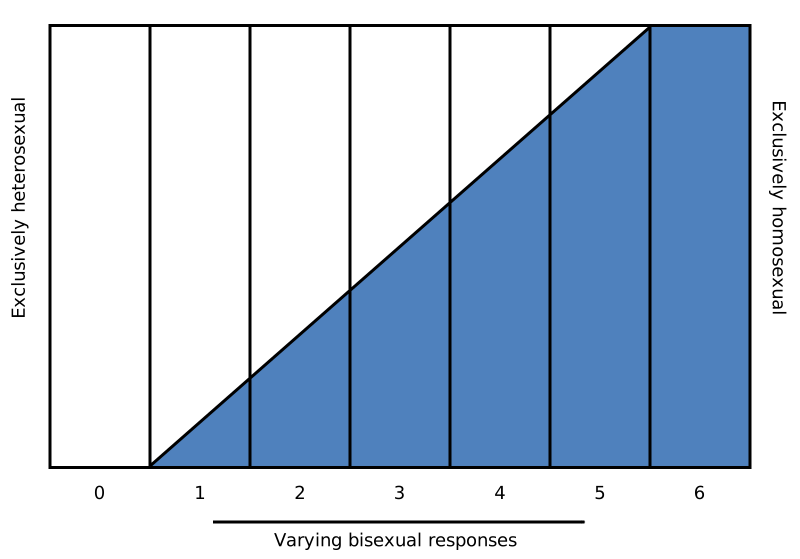
However, sexual orientation can be defined in many ways. Heterosexuality, which is often referred to as being straight, is attraction to individuals of a different binary sex/gender, while homosexuality, being gay or lesbian, is attraction to individuals of one’s own sex/gender. Bisexuality was a term traditionally used to refer to attraction to individuals of either male or female sex, but it has recently been used in nonbinary models of sex and gender(i.e., models that do not assume there are only two sexes or two genders) to refer to attraction to any sex or gender. Alternative terms such as pansexuality and polysexuality have also been developed, referring to attraction to all sexes/genders and attraction to multiple sexes/genders, respectively(Carroll, 2016).
Asexuality refers to having no sexual attraction to any sex/gender. According to Rothblum et al. (2020) about one percent of the population is asexual. Being asexual is not due to any physical problems, and the lack of interest in sex does not necessarily cause the individual any distress. Asexuality is being researched as a distinct sexual orientation.
According to current scientific understanding, individuals are usually aware of their sexual orientation during early adolescence (Hall et al., 2021). However, this is not always the case, and some do not become aware of their sexual orientation until much later in life. It is not necessary to participate in sexual activity to be aware of these emotional, romantic, and physical attractions; people can be celibate and still recognize their sexual orientation. Some researchers argue that sexual orientation is not static and inborn but is instead fluid and changeable throughout the lifespan, including during adolescence (Katz-Wise et al., 2023).
There is no scientific consensus regarding the exact reasons why an individual holds a particular sexual orientation. Research has examined possible biological, developmental, social, and cultural influences on sexual orientation, but there has been no evidence that links sexual orientation to only one factor (Alagha et al., 2025).
Biological processes occurring during the embryonic and and early postnatal life play a central organizing role in sexual orientation.
- Genetics. Using both twin and familial studies, heredity provides one biological explanation for same-sex orientation. Bailey and Pillard (1991) studied pairs of male twins and found that the concordance rate for identical twins was 52%, while the rate for fraternal twins was only 22%. Bailey et al. (1993) studied female twins and found a similar difference with a concordance rate of 48% for identical twins and 16% for fraternal twins. Multiple genes are associated with same-sex sexual behavior and explain 8-25% of the variance in same-sex sexual behavior (Diamond, 2021).
- Fraternal Birth Order. The fraternal birth order effect indicates that the probability of a boy identifying as gay increases for each older brother born to the same mother(Balthazart, 2018). According to Bogaret et al. “the increased incidence of homosexuality in males with older brothers results from a progressive immunization of the mother against a male specific cell-adhesion protein that plays a key role in cell-cell interactions, specifically in the process of synapse formation,” (as cited in Balthazart, 2018, p. 234). A meta-analysis indicated that the fraternal birth order effect explains the sexual orientation of between 15% and 29% of gay men.
- Hormones. Excess or deficient exposure to hormones during prenatal development has also been theorized as an explanation for sexual orientation. One-third of females exposed to abnormal amounts of prenatal androgens, a condition called congenital adrenal hyperplasia (CAH), identify as bisexual or lesbian (Cohen-Bendahan et al., 2005).
Developmental Outcomes for LGBTQIA+ Adolescents
Coming out, or the process of disclosing one’s LGBTQIA+ identity, can be a pivotal moment in an individual’s life. It can lead to feelings of self-acceptance and liberation, but it can also be a source of stress and anxiety, particularly when faced with potential rejection from family and friends. Therefore, support during this period is crucial for positive mental health outcomes. LGBTQIA+ youth are at a higher risk of experiencing bullying, discrimination, and rejection, which can lead to mental health challenges like depression, anxiety, and suicidal thoughts (CDC, 2023). Providing safe spaces, inclusive sex education, and access to mental health services is essential during this critical developmental stage (CDC, 2023).
As LGBTQIA+ individuals form relationships and seek community, they may face discrimination, exclusion, or a lack of legal recognition, which can impact their mental well-being. Supportive relationships and involvement in LGBTQIA+ organizations or communities can be protective factors for mental health (Ceatha et al., 2021). More recently, social media use among LGBTQ youth may support wellbeing well-being by providing connection with similar peer and accessing social support (Berger et al., 2022).
Many LGBTQIA+ individuals belong to multiple marginalized groups, such as people of color, immigrants, or individuals with disabilities. Intersectionality adds layers of complexity to their experiences because they may face discrimination based on multiple aspects of their identity, which can contribute to mental health disparities (Funer, 2023).
Research consistently indicates that LGBTQIA+ individuals experience higher rates of mental health conditions compared with the general population (Medina-Martínez et al., 2021). Common mental health issues include depression, anxiety, substance misuse, and suicidal ideation. These disparities are often attributed to the stressors associated with societal discrimination and minority stress.
Despite the challenges, many LGBTQIA+ individuals demonstrate resilience and empowerment by embracing their identities, advocating for their rights, and seeking support of trusted individuals. Building on these strengths is a vital aspect of promoting mental health and well-being. Mental health professionals and health-care providers must be sensitive to the unique culture and experiences of LGBTQIA+ individuals. This includes understanding the impact of discrimination, addressing concerns related to gender identity or sexual orientation, and offering affirming and inclusive care.
Video 11.9 Demographic Structure of Society–Sex, Gender, and Sexual Orientation explains various aspects of gender and sexual identity.
Check Your Understanding
a person’s psychological sense of self in relation to their gender. Many people describe gender identity as a deeply felt, inherent sense of being a boy, a man, or male; a girl, a woman, or female; or a nonbinary gender (e.g., genderqueer, gender-neutral, agender, gender-fluid, transgender) that may or may not correspond to a person’s sex assigned at birth, presumed gender based on sex assignment, or primary or secondary sex characteristics. (https://dictionary.apa.org/gender-identity)
the term to refer to the biological differences between males and females, such as genitalia and genetic differences
the socially constructed characteristics of women and men, such as norms, roles, and relationships between groups of women and men
an individual who exhibits sexual characteristics of both sexes.
umbrella term used to describe people whose sense of personal identity and gender corresponds with their birth sex
a term used to describe people whose sense of personal identity does not correspond with their birth sex
a process in which people learn to behave in a particular way as dictated by societal values, beliefs, and attitudes
the understanding that superficial changes do not mean that gender has actually changed
the organized set of beliefs and expectations that guides one’s understanding of gender.
children develop their own conceptions of the attributes associated with maleness or femaleness
how one thinks of oneself in terms of to whom one is romantically or sexually attracted
not only physical practices but also attitudes, experiences, desires, preferences, and a variety of related psychological and social phenomena, including any actions related not only to reproduction but also to pleasurable satisfaction (https://dictionary.apa.org/sexual-behavior)
a person’s sexual and emotional attraction to another person
sexual, romantic, or emotional attraction or activity between members of the opposite sex
sexual orientation characterized by romantic, emotional, and/or sexual attraction to, or engagement in romantic or sexual relationships with, more than one gender
the romantic, emotional, and/or sexual attraction to people regardless of their gender
sexual attraction to various, but not necessarily all, genders
